 Natural Revolution Empowering Natural Living
 Whether you like to admit it or not, the United States has become a police state, with outspoken critics of the government being silenced, travel restrictions from the D.H.S. across the United States and other infringements upon our freedoms, privacies and liberties — it is indeed upon us. This is not a conspiracy theory, this is happening right now throughout the U.S. of the current administration silencing dissidents as well as journalist and whistleblowers, creating fear among those who dare speak out for truth and justice.
Forces within the U.S. government operating at the highest levels of our country’s political, financial, intelligence and military hierarchies are swiftly setting into motion a series of events that should more of these government abuses come to fruition, the populace will be so desperate for government intervention that they’ll willingly surrender their liberty for the perceived security of a militarized police state.
The act of self-preservation is at the center of this article and covers some, although not all, necessities to sustain one’s needs. Having food at hand is paramount if for many different reasons, one being a natural disaster strikes, a black-out of power occur or a government out of control. Tyranny never comes with loud fanfare — it sneaks in quietly under the guise of ‘protecting freedom’. And if one thing is profoundly certain — it is that governmental powers are never to be trusted, as history has shown.
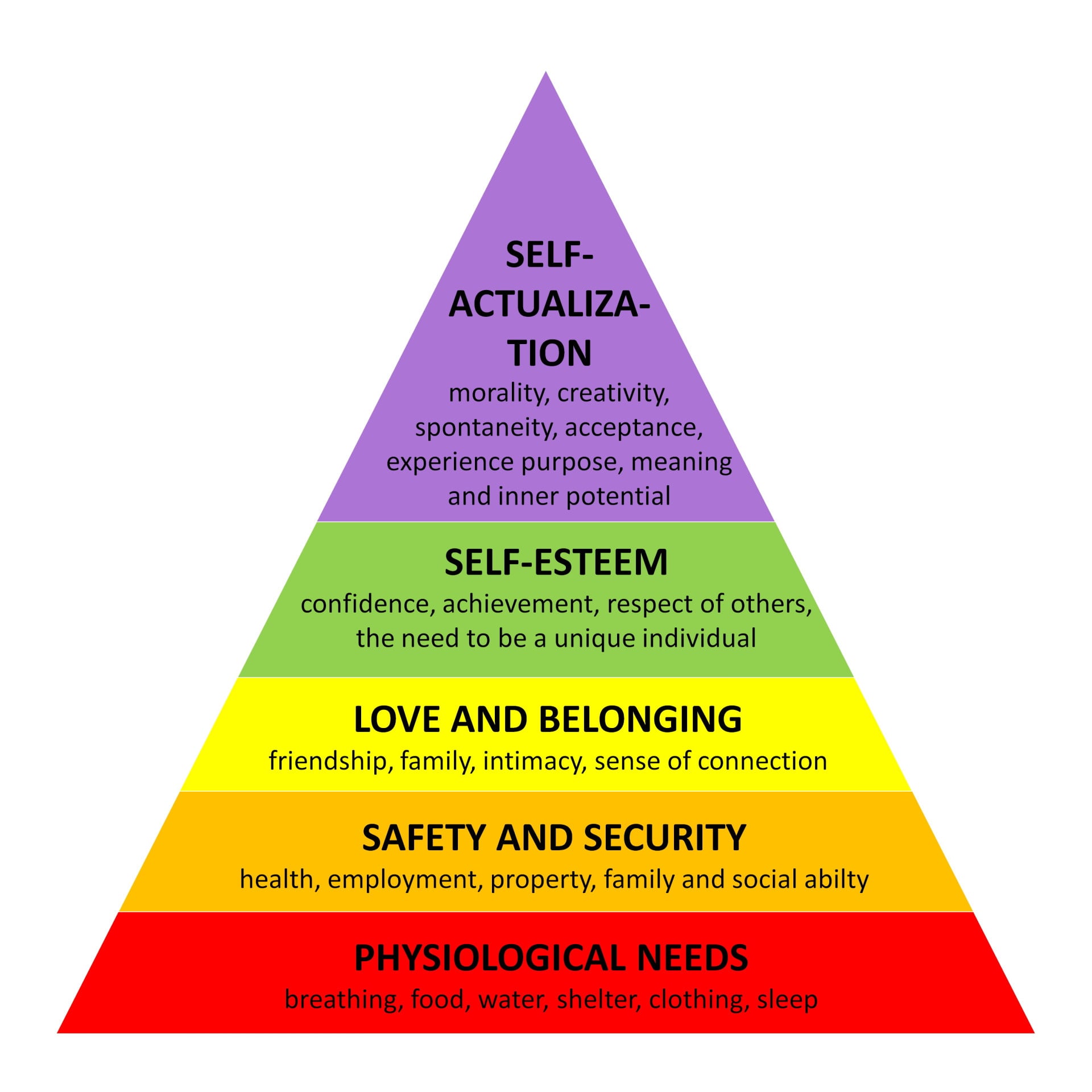
Maslow’s Hierarchy of Needs is the foundation for survival. The first thing we must all have is food. Without the necessary vitamins and nutrients, and of course calories, we cannot survive. Clean water the next on the list. With the very real possibility that food will become scarce or government rationed in an emergency, coupled with the current administration in D.C. is in bed with Monsanto and other GMO-producing companies, we need to exercise our option to grow our own food.
Safe, nutritious food production is possible and easy to do
The European Union is debating legislation to control the growing of any non-government approved seeds that would make the act of doing so a crime. This is no longer a cloak and dagger novel. It is REAL!
When Washington is making backroom deals with Monsanto and the like, it is already setting up the necessary infrastructure to cram its agenda up the exit end of our digestive tracts. Stay informed! It has already been unequivocally shown by many peer review scientific research studies that GMO foods are a serious health, environmental and economic disaster. This is not a fairy tale, this is real science.
Having a garden full of foods that can sustain you, is essential to your survival should the SHTF. But what better way to not only provide food for yourself, but know that the foods you grow can be totally organic without the use of any pesticides or other harmful fertilizers.
To get started, you only need a few things: organic seeds, soil or soilless soil, filtered water, natural fertilizer (Azomite is the best of the bunch), and a growing container. Imagine going out to your garden and hand picking a ripe tomato that you grew from seed. Imagine the incredible taste of that tomato, which you’ll never find in any commercial grocery store. This is only part of the rewards that come from growing your own food. And if you have a front yard with a lawn, you’re wasting valuable assets which are literally running down the street drains. If you live in a small place, growing in containers or vertically is definitely a viable option.
Simple compost pile technique
Any material that was once plant matter that has not been chemically treated is fair game, with the exception of pineapple. (Research has shown that pineapple contains an alkaloid that may be harmful to worms.)
1. Select a location that is level and at or above grade to prevent flooding.
2. Pile non-glossy paper and cardboard (colored paper is okay). This is a great way to destroy personal/confidential information.
3. Add vegetable, fruit and yard scraps.
4. Add egg shells, coffee grounds and tea bags.
5. Add livestock manure (NO cat, dog or human manure due to possible pathogen cross-over).
6. Add up to 12 pounds of red wigglers or European night crawlers. (These worms do the work of breaking the compost down and keeping it turned, so you don’t have to).
7. Shape the top of the pile like a funnel to catch rain water. If rain is not forthcoming, drench to the consistency of a wet sponge.
8. Add 1 gallon of the molasses/fish & seaweed blend solution to the pile.
NOTE: The key is “the rule of 24s.” Worms thrive most in 24 inches between the top layer of soil and daylight. So your pile should be at least 48 inches across and 24 inches deep. This will provide adequate protection from most weather in the heat of the south. In northern states add depth to provide winter freeze protection. You will have results in 4-6 weeks that will be ready to be screened.
Labor Saver Compost Screener
A simple compost screener can be made using reclaimed or scrap lumber and ¼ inch hardware cloth (rabbit mesh).
1. Construct a frame of 1 inch by 4 inches lumber. (2 feet x 3 feet)
2. Cover bottom of frame with hardware cloth.
3. Cover edges of hardware cloth with scraps of trim to avoid sharp edges.
4. Add 4 casters. (One pair should be larger than the other to provide a tilt to the screen.)
5. Construct a track just slightly wider than the screen, at least 5 inches long. Suspend across 2 sawhorses. Spread one of your tarps out under the tracks.
6. With the screen riding in the tracks, use your potato spade to scoop some of the compost onto the screen, but do NOT fill it more than half way. Roll back and forth vigorously.
7. Any debris left on the screen goes back into the pile to be re-worked. The compost that passes through the screen is your “well worked” compost.
Now is the time to invest in your soil.
Whether in your bug out location or your own backyard, it’s time to dig in, literally. Preparing to grow food for your family, friends or just yourself is a very easy way to invest in your sustainability/survivability.
There are many techniques and opinions out there that are simple and successful.
Here is an easy option:
- Mark out an area that is roughly 100-200 square feet, for each person that is to be provided for. Choose an area that is accessible to water and has full sun.
- Remove all sod/grass, weeds, debris and large rock (anything golf ball size or larger).
- Till to a depth of 12 inches, adding 3-6 inches of well-worked compost in at this time.* You can add 5 pounds of worm castings per 100 square feet of area. They add additional benefits to the soil to aid in the release of plant nutrients in your garden.
- Level the area with a rake. If located on a slope, shape terraces now.
- Apply generous amounts of molasses and fish & seaweed blend solution to thoroughly saturate the top 3-4 inches of soil. (Mix 2 ounces each of liquid molasses and fish & seaweed blend per gallon of water to create the solution) This provides a gentle fertilizer for your plants and a complex carbohydrate supply for the beneficial microbes and bacteria.
Now that you have selected and prepared your site, it is time to select the plants and seeds that will provide you with the nutrition to survive. Start doing some research into what will grow in your specific area of the country. Make a wish list of what you want to plant, paying special attention to the germination and growing conditions that each variety requires. Some plants are easier to grow using starts, others by seed. Never grow anything that you will not eat. This is a waste of time and resources!
Now that you have the basics of what it takes to get growing, and if you have lawn or backyard, or even a porch or balcony, there’s no better time to start growing your very own food.
For more ways to start growing your own food, I highly recommend John Coller, an expert gardener that I’ve been following for years. John provides you with tips and tricks as well as shares his experiences growing food at his urban homestead. John is dedicated to helping you sustainably grow your own food in your front yard and beyond. His videos can be found at www.GrowingYourGreens.com
Contributing sources:
- www.simplypsychology.org
- www.shtfplan.com
- Gordon R. Wybo

